
Why Nursing Is Among the Top 10 Most Demanding Degrees

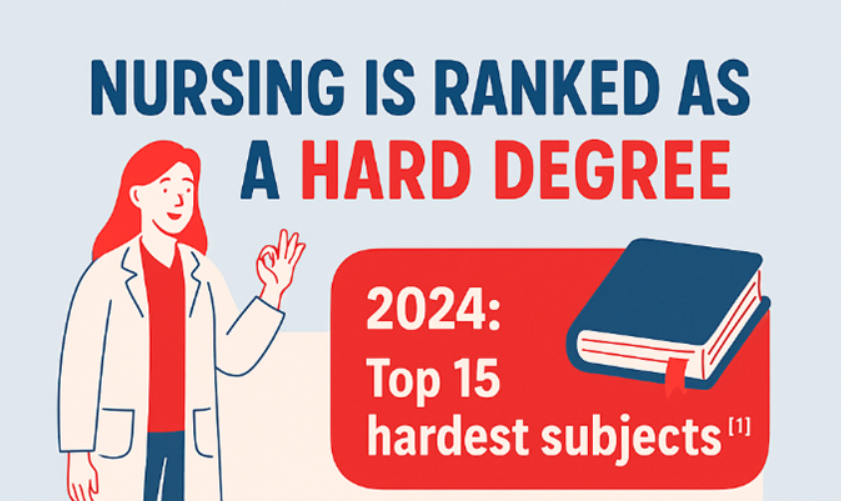
👩⚕️ Welcome, NurseLife Family!
Let’s be honest, nursing isn’t for the faint-hearted. It’s for those who thrive under pressure, love learning, and find meaning in making a difference. If you’ve ever wondered why nursing keeps showing up in lists of the hardest degrees in the world, this blog is for you.
Scroll through, share your thoughts in the comments, and remind yourself just how incredible this profession is!
Key quote to share
“The BSN degree is absolutely one of the 10 most difficult undergraduate programs. Students need to understand complex concepts quickly and demonstrate practical competence in both theory and clinical work.” (3)
The academic and practical load is intense
Nursing isn’t just about memorizing textbooks. It’s about mastering science, thinking critically, and acting confidently in life-or-death situations.
Students must balance theory with long hours of clinical training, mastering everything from anatomy to complex patient care.
Ranked Among the Hardest Degrees Globally
You’re not imagining it. Nursing really does make it onto the global “most difficult degrees” lists every single year.
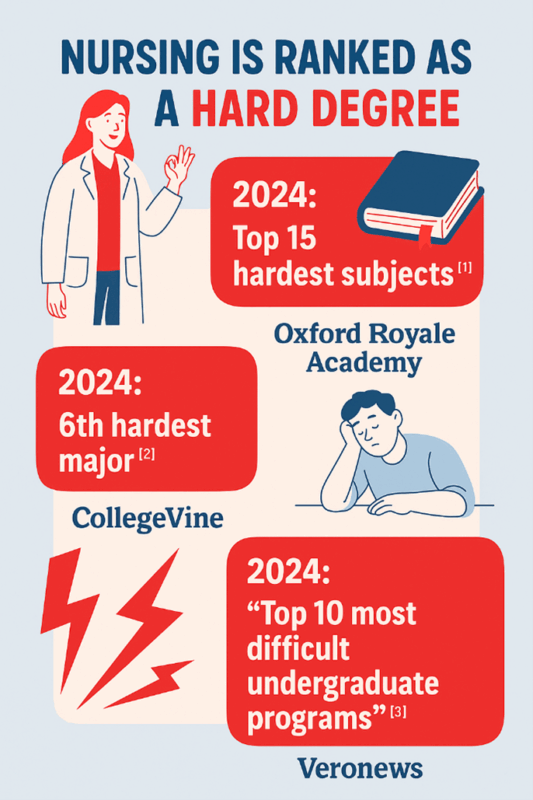
🧠 Fun Fact: Nursing students average between 16–20 study hours per week, which is almost double the average for other degrees (2).
Why it’s so challenging
Several factors make nursing uniquely demanding:
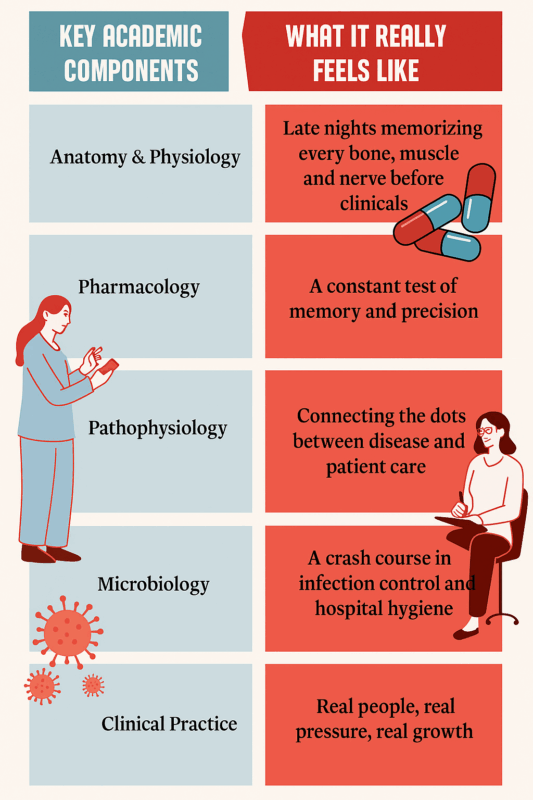
- High academic content: Nursing students study anatomy, physiology, microbiology, pharmacology, psychology and more. Many of which are traditionally science-heavy.
- Practical & clinical components: Beyond theory, nursing requires supervised clinical practice, hands-on skills, patient interaction and decision-making in real-world settings.
- Emotional & physical demands: Clinical placements often mean early mornings, long hours, dealing with human suffering, death, complex cases.
- Time management & sacrifice: Many nursing students report that the programme demands their top priority, with limited downtime.
- High standards & attrition risk: Many institutions note that nursing programmes have tough grading, strict criteria and higher attrition compared to some other undergraduate degrees.
🧩 Reflect & Share
Think back: What’s one lesson nursing school taught you that no textbook ever could?
💬 Drop your thoughts in the comments, your story could inspire someone else!
Wrap-up
Yes, it’s hard. But that’s exactly what makes nurses so capable, compassionate, and resilient. Rather than seeing that as a barrier, see it as a badge: the very rigour you’re embracing prepares you for one of the most important, impactful roles in healthcare. When you walk into a ward, take a clinical placement or care for a patient, you’re carrying that hard-won knowledge and strength into action.
For every moment of stress or long night of study, remember why you began. The degree is tough. The work ahead is even tougher. But you’re already stepping into something extraordinary. We don’t study to pass the test; we study to save a life.
So next time someone tells you nursing is “just about taking vitals,” smile and remember:
You survived pharmacology, clinicals, and 12-hour shifts. You’re built different.
